Can You Teach Yoga After a 200 Hour Course?
By Renu Singh, Co-Founder & Course Director · Updated August 2026 · 7 min read
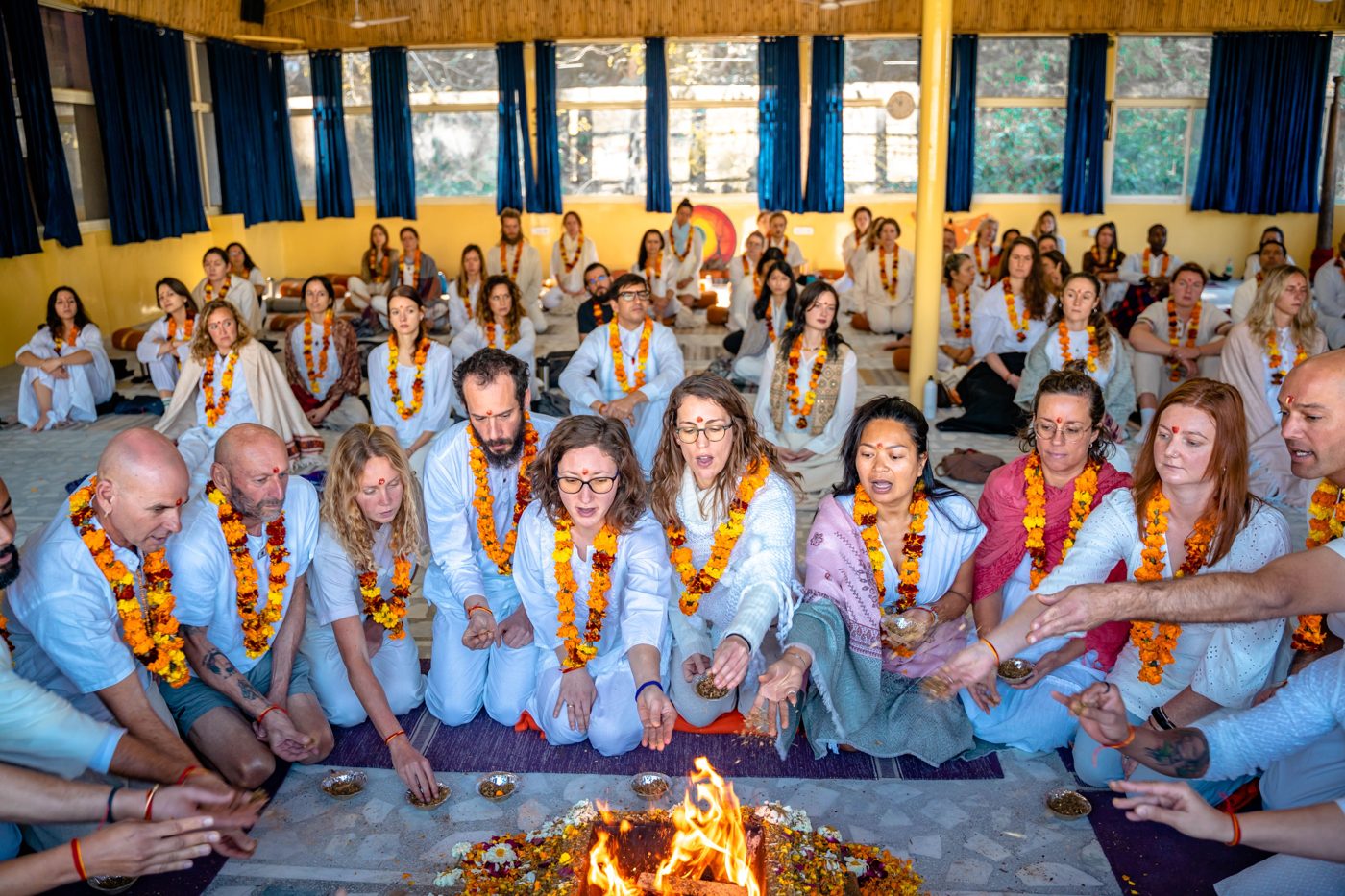
Namaste. You finish the closing ceremony, certificate in hand, garland around your neck — and then comes the question the brochures never answer: now what? Can you really teach with 200 hours? Will anyone pay you? Here are the honest answers I give my own graduating students.
Can you legally teach after a 200 hour course?
Yes. The 200 hour certification is the internationally accepted entry standard — the qualification studios, gyms and retreat centres worldwide list as their minimum requirement. There is no yoga “licence” beyond it in most countries; with an RYT-200 (and insurance where local law expects it), you may teach from day one. The real question is not permission — it is readiness, and that came with your training.
What yoga teachers actually earn — honest numbers
Let me give you the figures schools avoid. In India: studio teachers begin around ₹15,000–35,000 per month; experienced teachers reach ₹30,000–50,000; per-class rates run ₹500–1,500. In the West: $30–$75 per class typically, with experienced city teachers above $100. The truth behind the averages: almost no teacher lives on studio classes alone. The real income stacks: private students (2–4× class rates), corporate sessions, online offerings, workshops — and eventually retreats and trainings, where dedicated teachers earn well. Yoga pays modestly at first and honestly always; it rewards patience, not haste.
“Almost no teacher lives on studio classes alone. The income stacks: privates, corporates, workshops — and eventually retreats. Yoga rewards patience, not haste.”
Your first year: the honest playbook
Teach immediately and constantly — free community classes, friends, parks, family: the first hundred classes teach you what no training can. Start where you are known — your workplace, your neighbourhood; strangers book teachers whom somebody trusts. Pick a person, not a style — “yoga for desk-bound engineers” finds students faster than “hatha yoga classes.” And keep practising as a student — the day teaching replaces practice, the teaching hollows.
Registering with Yoga Alliance
If your training was with a registered school, you may register as RYT-200 — useful for Western studio applications and insurance, and increasingly checked by online platforms. It is a registry, not a superpower; list it, then let your teaching speak.
When — and why — to take the 300 hour
Not immediately. Teach first — six months, a year — until your questions stop being theoretical. Then the 300 Hour advanced training transforms you differently: you arrive carrying real students’ real problems, and the deeper practices — advanced prāṇāyāma, therapeutic work, subtle body — land on prepared ground. RYT-500 also unlocks the higher tier of teaching work: trainings, retreats, mentorship roles.
The longer arc
Five years into teaching, the successful graduates I know share one pattern: they treated the first years as apprenticeship, not career — income modest, learning enormous — and let the profession compound. The ones who quit expected the certificate to do the work. The certificate opens the door; you are the one who must walk through it, class after class.
Wherever you trained, I wish you a teaching life of depth. And if your next step is the 300 hours, our December batch details are here — ten seats, by the Ganga, where the deeper work waits.
Hari Om Tat Sat,
Renu Singh