What Is Traditional Haṭha Yoga?
By Renu Singh, Co-Founder & Course Director · Updated August 2026 · 6 min read
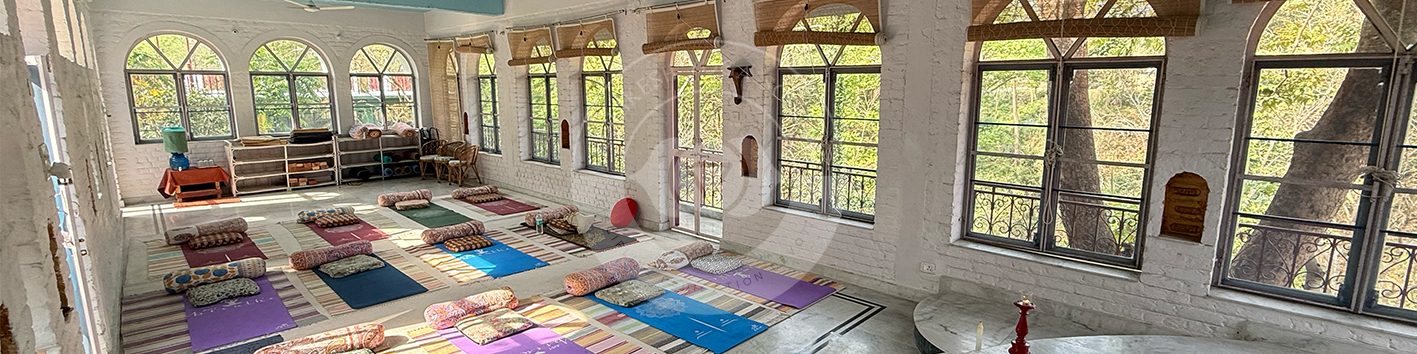
Namaste. The word “hatha” has travelled far from home. In studios around the world it has come to mean “slow, gentle yoga for beginners.” In the tradition I was trained in, it means something almost opposite: the complete, rigorous science of transforming body and energy into vehicles for meditation. Let me introduce you to the real Haṭha Yoga.
What the word actually means
“Haṭha” is often translated as “force” or “effort,” and esoterically as the union of ha (sun) and ṭha (moon) — the two currents of energy the tradition maps in every human being: the warming, active, solar force and the cooling, receptive, lunar force. Haṭha Yoga is the discipline of bringing these two into balance. When they meet, the texts say, energy enters the central channel and meditation arises naturally — not as struggle, but as consequence.
“Haṭha Yoga is not gentle stretching. It is the patient science of preparing the body to sit in stillness — so that meditation happens by itself.”
The classical toolkit
The medieval manuals — the Haṭha Yoga Pradīpikā, the Gheraṇḍa Saṁhitā — describe a far richer toolkit than modern classes use: Ṣaṭkarma, six cleansing practices that prepare the inner body; Āsana, far fewer postures than today’s repertoire, held long and steady; Prāṇāyāma, the heart of the system — expanding and directing the life-force; Mudrā and Bandha, seals and locks that contain and channel energy; and Nāda, absorption in inner sound. Notice how little of this survives in a modern “hatha class.” Traditional training restores the whole.
How it differs from modern flow styles
Dynamic styles have real value — but their centre of gravity is movement. Traditional Haṭha holds fewer postures for longer, breathes more than it moves, and treats every practice as preparation for sitting. In a flow class you may complete sixty postures; in a traditional Haṭha session you may explore eight — and meet yourself in each one. Neither is wrong. But they are different sciences with different aims.
The lineage we carry
At our school we teach in the spirit of the Bihar School of Yoga, where I lived and studied for five years — a lineage that preserved the full classical system while presenting it with modern clarity: cleansing practices taught safely, prāṇāyāma built patiently over weeks, Yoga Nidrā and meditation woven through every day. This is the Haṭha you will meet in our 200 Hour training — and in our understanding of yoga itself.
Is traditional Haṭha for you?
If you are drawn to depth over performance — if you sense there is more beneath the postures than the postures — then yes. You do not need flexibility; you need sincerity. The practice asks for patience and gives back, slowly and permanently, a body that sits at ease and a mind that settles like evening water.
Hari Om Tat Sat,
Renu Singh